Program Snapshot
| 128 | Credit Hours | |
|---|---|---|
| 4 | Years to Complete |
Teacher as Servant-Leader
The primary mission of the Boyce Teacher Education Program is to provide Christ-centered quality teacher education, preparing the next generation of educators to be servant-leaders in private and public schools and on the mission field.
The TEP is designed to equip the servant-leader with the range of knowledge necessary for the profession of teaching, with the skills of teaching as recognized in the education profession, and with the dispositions of a servant-leader in a world of diversity.
Course Information
| Course Number | Description | Credit Hours |
|---|---|---|
| BC 101 | Boyce College 101 | (1) |
| CP 100 | Cooperative Program | (2) |
| Total | (3) | |
| Course Number | Description | Credit Hours |
|---|---|---|
| BA 210 | Economics | 3 |
| EN 101 | English Composition I | 3 |
| EN 102 | English Composition II | 3 |
| HS 161 | World History | 3 |
| HS 171 | American History | 3 |
| MA 111 | College Algebra | 3 |
| PH 321 | Religion in the Public Square | 3 |
| PS 101 | Introduction to Psychology | 3 |
| SC 111 | Principles of Biology | 3 |
| SC 112 | Principles of Biology Lab | 1 |
| SC 121 | Principles of Physical Science | 3 |
| SC 122 | Principles of Physical Science Lab | 1 |
| SP 105 | Introduction to Public Speaking | 3 |
| SS 211 | American Government | 3 |
| Total | 38 | |
| Course Number | Description | Credit Hours |
|---|---|---|
| BL 101 | Old Testament Survey I1 | 3 |
| BL 102 | Old Testament Survey II1 | 3 |
| BL 111 | Hermeneutics1 | 3 |
| BL 151 | New Testament Survey I1 | 3 |
| BL 152 | New Testament Survey II1 | 3 |
| MS 101 | Introduction to Christian Missions | 3 |
| MS 105 | Personal Evangelism | 3 |
| TH 211 | Christian Theology I1 | 3 |
| TH 212 | Christian Theology II1 | 3 |
| — | Choose (1) of the following (2) courses: PH 108 Worldview Analysis or TH 331 World Religions |
3 |
| Total | 30 | |
| Course Number | Description | Credit Hours |
|---|---|---|
| ED 235 | Integrated Content for Elementary2 | 3 |
| EN 351 | Children’s Literature | 3 |
| Total | 6 | |
| Course Number | Description | Credit Hours |
|---|---|---|
| ED 200 | Introduction to Education3 | 3 |
| ED 210 | Computers & Media in the Schools2 | 3 |
| ED 220 | Teaching Exceptional Learners | 3 |
| ED 230 | Child & Adolescent Development2 | 3 |
| ED 240 | Educational Assessment | 3 |
| ED 310 | Elementary Math P-5, I | 3 |
| ED 311 | Elementary Math P-5, II | 3 |
| ED 315 | Literacy Assessment | 3 |
| ED 320 | Teaching Science P-5 | 3 |
| ED 330 | Teaching Social Studies P-5 | 3 |
| ED 390 | Current Issues in Education | 3 |
| ED 410 | Teaching Language Arts P-5 | 3 |
| ED 420 | Teaching Reading P-5 | 3 |
| ED 430 | Classroom Management | 3 |
| ED 485 | Clinical Experience I: Teaching | 3 |
| ED 491 | Clinical Experience II: Supervised Teaching4 | 9 |
| Total | 54 | |
Total Elementary Teacher Education (BS): 128
1 Also available during Winter/Summer Term
2 Course which can be taken prior to applying for the Educator Preparation Program (EPP)
3 Prerequisite course for EPP Application and all EPP courses
4 ED 491 Clinical Experience II: Supervised Teaching is the only course a student takes his/her final semester in the EPP.
Clinical Experience is required for most Professional Education Studies courses.

Frequently Asked Questions
Prospective students interested in the Teacher Education Program must first be accepted to Boyce College. For more information on how to apply to Boyce, you can contact the Office of Admissions at boyceadmissions@sbts.edu, or you can apply here.
In order to apply to the Teacher Education Program, students must pass EN101 English Composition I and ED200 Introduction to Teacher Education and have completed a year of studies at Boyce College. Additionally, all students applying for the TEP must meet the Praxis Core Academic Skills for Educators (CORE) requirements (Math, Reading, and Writing). Other requirements for acceptance into the Teacher Education Program will be addressed in ED200 with the program chair.
The Core Academic Skills for Educators (CORE) exam is an important step in preparing for the Boyce College Teacher Education Program. All students applying for the TEP must meet the requirements of all three sections of CORE (Reading, Writing, Math) successfully prior to admittance. This is required for all three emphases within the TEP: state certification, classical, and ESL. In the fall of 2021, the Kentucky Department of Education approved additional assessments which could meet the CORE exam requirements.
You can learn more about Praxis CORE, additional CORE score substitutions, and access available study materials here.
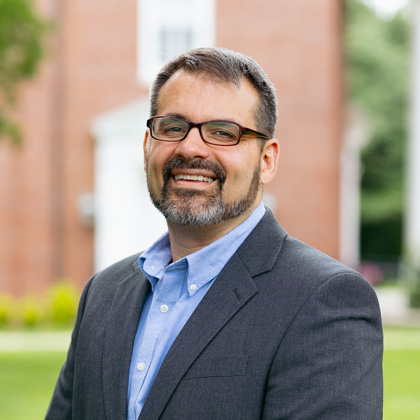
If you have additional questions regarding the admissions process to the Teacher Education Program, you can contact Dr. Melissa Tucker, program chair, directly at mrtucker@sbts.edu.
Degree Emphases
Teacher Education students can choose from one of three emphases.
Classical Education, English as a New Language/Second Language (ESL/ENL), and the National/State Certification.
The degree requirements for National/State Certification are listed under Program of Study and the degree requirements for Classical Education and ESL/ENL are under Degree Emphases.
All three emphases are ACSI Certified.
Minors
See the Academic Catalog for more information on Minors.
Learning Outcomes
- Students will be able to demonstrate a knowledge of the Bible, interpret Scripture’s original meaning, and apply Scripture to contemporary situations.
- Students will be able to integrate systematic and historical theology into a larger biblical framework.
- Students will be marked by the disposition of servant-leadership.
- Students will be able to cultivate an environment of cooperation and collaboration.
- Students will be able to consistently engage in reflection as a means of professional development.
- Students will be able to recognize the importance and value of teaching as a profession.
- Students will be able to demonstrate an awareness of the multi-faceted nature of educating individual, diverse learners.
- Students will be able to apply knowledge and skills, developed by a thorough and researchedbased professional education, to the public or private elementary classroom
- Students will be able to apply the best practices for effective learning to meet the diverse educational needs of an ever-changing society.
- Students will be equipped with the knowledge and skills to improve the physical, emotional, intellectual, social, and spiritual dimensions of the learner.